

Automated Clause Extraction: How AI Reads Your Contracts and What It Finds
Deep dive into how AI clause extraction works. Learn about NLP models, clause taxonomies, confidence scoring, and how to implement automated clause extraction in your legal workflow.
Space Sign Editorial Team
Product & Technology
Automated Clause Extraction: How AI Reads Your Contracts and What It Finds
How AI Clause Extraction Works
1. Document Ingestion
The AI ingests documents in various formats (PDF, DOCX, scanned images via OCR) and normalizes them into machine-readable text.
2. Clause Segmentation
The AI identifies logical clause boundaries — where one clause ends and another begins — using:
3. Classification
Each segmented clause is classified using a combination of:
4. Confidence Scoring
Each classification includes a confidence score (0-100%) indicating how certain the AI is about its identification. Low-confidence clauses are flagged for human review.
The Clause Taxonomy
Modern AI systems can identify 50+ clause types. The most common include:
| Clause Category | Examples |
|---|---|
| Termination | Termination for cause, termination for convenience, automatic renewal |
| Confidentiality | NDA, non-disclosure, confidentiality obligations, exclusions |
| Indemnification | Mutual indemnification, one-way indemnification, caps, baskets |
| Limitation of Liability | Liability caps, exclusions, consequential damages waivers |
| Payment Terms | Pricing, invoicing, late fees, payment schedules |
| Intellectual Property | IP ownership, license grants, assignment of rights |
| Dispute Resolution | Arbitration, governing law, venue, class action waivers |
| Data Protection | GDPR clauses, data processing, breach notification |
| Insurance | Coverage requirements, additional insured, waivers of subrogation |
| Force Majeure | Event definitions, notice requirements, termination rights |
Building Your Clause Library
Most organizations have specific clauses they care about. Implementing automated clause extraction means:
Step 1: Define Your Taxonomy
Identify the clause types most relevant to your business. Start with 20-30 types and expand.
Step 2: Configure Custom Rules
Set up rules for deviation from standard language. What's acceptable? What needs human review?
Step 3: Establish Risk Thresholds
Define which deviations are low, medium, or high risk. Configure the AI to escalate accordingly.
Step 4: Train on Your Documents
Upload 50-100 precedent contracts so the AI learns your organization's standard language.
Accuracy Metrics Explained
Understanding clause extraction accuracy is essential for trusting AI output:
Implementation Best Practices
*Ready to automate clause extraction for your legal team? Start your free trial or request a demo.*
Ready to Try Space Sign?
Experience the power of enterprise-grade, AI-powered e-signatures.
Read Next
Continue exploring related topics

How AI Contract Analysis Reduces Legal Review Time by 80%
Real data on how AI contract analysis cuts legal review time by 60-80%. Before and after metrics, use cases, and implementation strategies for legal teams.

AI Contract Analysis for Small Businesses vs Enterprise: What's the Difference?
Compare AI contract analysis needs for small businesses vs enterprises. Features, pricing, scalability, and implementation strategies for organizations of every size.
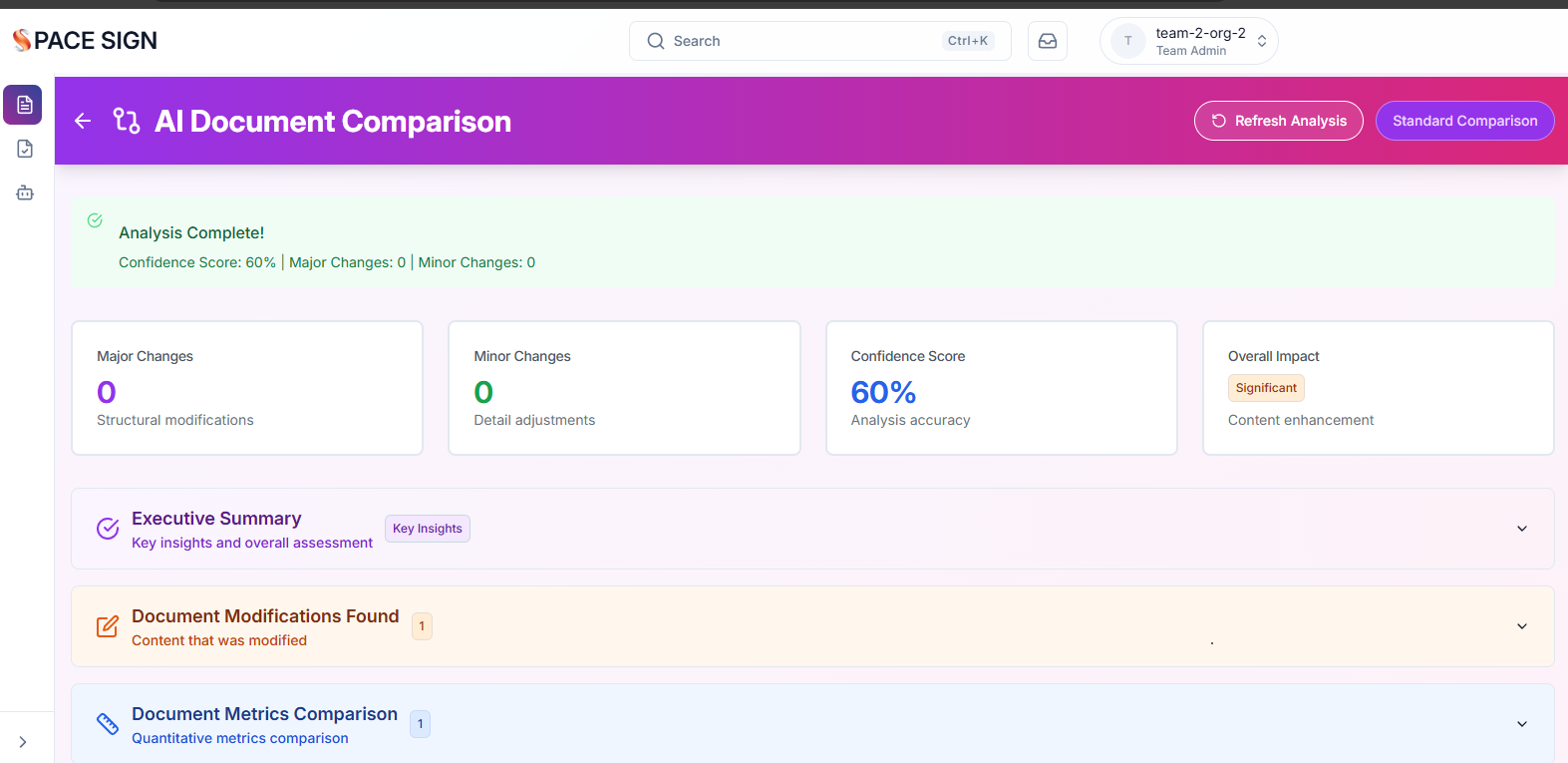
How AI Document Analysis is Revolutionizing Contract Review
AI-powered document analysis can review contracts in seconds, not hours. Learn how Space Sign's AI identifies risks, extracts key clauses, and suggests improvements automatically.